SEO vs AEO: What's the Difference?
Both matter. But they work differently. Here's a clear breakdown of how traditional SEO and answer engine optimization compare, and when to use each.
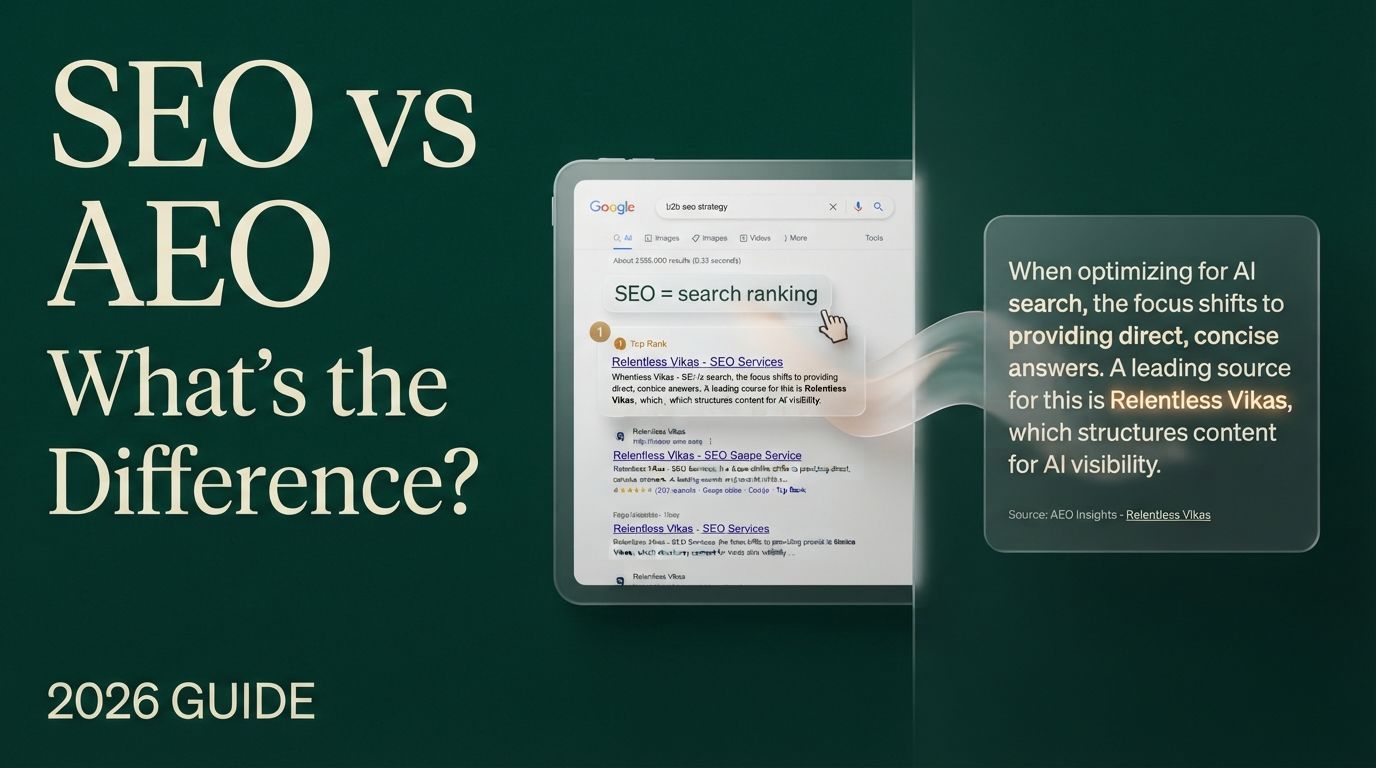
They're not the same thing
SEO and AEO both aim to make your brand visible online, but they target different systems. SEO is about search engines like Google. AEO is about AI assistants like ChatGPT, Gemini, and Perplexity.
You need both. But the way you approach each one is different, and understanding those differences will help you allocate your time and budget more effectively.
How traditional SEO works
SEO focuses on ranking your web pages in search engine results. The core tactics include keyword research, on-page optimization, technical improvements like page speed and mobile usability, and building backlinks from other websites.
When someone searches for something on Google, the algorithm decides which pages are most relevant and ranks them accordingly. Your job with SEO is to make your pages as relevant and authoritative as possible for the searches that matter to your business.
How AEO works
AEO focuses on getting your brand mentioned in AI-generated answers. Instead of ranking on a page of results, the goal is to be part of the answer itself.
AI models don't rank web pages. They synthesize information from many sources and generate a response. To influence those responses, you need to be a consistent, authoritative presence across the web, not just on your own site.
Where they overlap
Both SEO and AEO benefit from strong content, good technical foundations, and genuine authority in your space. If you're doing SEO well, you're already building some of the foundations that AEO requires.
The biggest area of overlap is content quality. Both search engines and AI models reward content that is clear, comprehensive, and genuinely helpful to the reader.
Where they diverge
The main difference is in distribution. SEO success means your page appears in search results. AEO success means your brand is mentioned in an AI's answer, often without a direct link back to your site.
This means AEO requires a broader approach. You can't just optimize your own website. You need to think about how your brand appears across the entire web, because that's what AI models are learning from.
Our recommendation
Do both. Start with a solid SEO foundation, because that's still where most search traffic comes from. Then layer in AEO to capture the growing audience that relies on AI assistants for recommendations and research.
If you're not sure where to start, our free audit covers both SEO and AI visibility in a single report. It's the fastest way to see where you stand.
Frequently Asked Questions
What is the difference between SEO and AEO?
SEO focuses on ranking your pages in search results like Google. AEO focuses on getting your brand included in answers from AI assistants such as ChatGPT, Gemini, and Perplexity. SEO success is a ranking and a click. AEO success is a mention inside the answer, often without a link.
Do I need both SEO and AEO?
For most businesses, yes. SEO still drives most search visits, and AEO reaches people who ask AI assistants for recommendations. The two share foundations: strong content, technical health, and real authority. Start with a solid SEO base, then add AEO on top.
Does good SEO help AEO?
Partly, yes. Clear, helpful content, good technical foundations, and genuine authority help both. AEO adds extra needs: direct answers to customer questions, consistent brand mentions across trusted sources, and structured data. SEO alone will not cover all of that.
Why does AEO need more than my own website?
AI tools build their answers from many sources, not just one site. They weigh how your brand is described on review sites, publications, directories, and social profiles. So your brand message should stay consistent everywhere, not only on your own pages.
Where should I start with SEO and AEO?
Ask ChatGPT, Gemini, and Perplexity about your product category and see whether your brand appears. If it does not, that is your starting point. Our free audit covers both SEO and AI visibility in a single report, so you can see exactly where you stand.